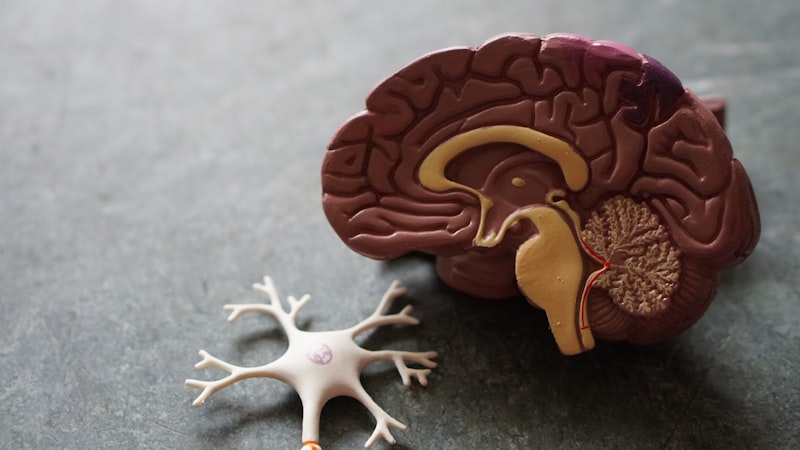
Attention is one of the most precious resources a person has. When it frays — when focus slips, impulses fire before thought, and the mind refuses to settle — life becomes an uphill battle. For millions of people, that struggle has a name: attention-deficit/hyperactivity disorder. But a quieter question has been gaining traction in research labs: what role does the gut microbiome play in attention, impulse control, and focus?
The idea that digestion could influence something as immaterial as concentration once sounded far-fetched. Today it sits at the center of one of the fastest-growing areas of neuroscience — the study of how the trillions of microbes in your intestines communicate with your brain.
The Gut-Brain Axis: A Two-Way Conversation
Your gut and your brain are in constant dialogue. They speak through the vagus nerve, through hormones, through immune signals, and through metabolites produced by gut bacteria. This communication network — the gut-brain axis — is not a fringe idea. It is mainstream neurobiology, and it runs in both directions: the brain influences digestion, and the gut influences mood, cognition, and behavior.
Attention and impulse control depend heavily on a small set of neurotransmitters and the brain regions that use them. And here is where the microbiome enters the picture: gut bacteria participate in the production and regulation of several of those exact molecules.
For a broader overview of this system, see our guide to the gut-brain axis and your "second brain" →
How Gut Bacteria Influence Attention and Impulse Control
Researchers studying the gut-ADHD link have identified several plausible pathways. None of them is proven to cause ADHD, and it is important to be honest about that. But the mechanisms are worth understanding.
1. Neurotransmitter Precursors
Dopamine and norepinephrine are the neurotransmitters most closely tied to attention, motivation, and impulse control. Many of the standard medications for ADHD work by adjusting their availability in the brain. Interestingly, certain gut bacteria are involved in producing precursor molecules that feed into these same pathways. A microbiome that is out of balance may alter how much raw material the body has to work with.
2. Short-Chain Fatty Acids and Brain Inflammation
When gut bacteria ferment fiber, they produce short-chain fatty acids like butyrate. These compounds help maintain the intestinal barrier and calm inflammation — including, emerging research suggests, inflammation that can reach the brain. Low-grade neuroinflammation has been observed in some studies of ADHD and other neurodevelopmental conditions, and butyrate appears to play a protective role.
3. The Vagus Nerve and the Microbiome's Signal
Gut microbes can stimulate the vagus nerve directly, sending signals upward to the brainstem and regions involved in arousal and attention. Studies in animals have shown that severing the vagus nerve changes some behavioral effects of the microbiome — evidence that this line of communication is real, not metaphorical.
"The gut microbiome does not 'cause' ADHD — but it may shift the terrain on which attention and impulse control play out, and that terrain is something we can influence."
What the Research Actually Shows
Several studies have observed differences in the gut bacteria of people diagnosed with ADHD compared with control groups. Some report lower diversity; others note shifts in specific bacterial groups. A handful of small trials have tested probiotics alongside standard care, with some encouraging — but preliminary — results.
It is essential to say clearly: this research does not suggest that gut health is a replacement for professional care, diagnosis, or treatment. Attention difficulties are complex, shaped by genetics, environment, sleep, and countless other factors. What the research does suggest is that gut health is one lever — one of many — that may support the brain systems involved.
The Gut-Inflammation-Focus Feedback Loop
One of the more interesting findings is that the relationship runs in circles. Poor attention and high stress make it harder to eat well, sleep well, and stay hydrated — all of which harm the gut. A compromised gut, in turn, can worsen brain fog, irritability, and the very focus problems that started the cycle.
If this resonates, our article on gut inflammation and brain fog → explores how the same loop drives mental fatigue.
The practical message is liberating: break the loop anywhere, and the whole cycle tends to improve. Even modest changes — more fiber, less ultra-processed food, better sleep — can nudge the system in the right direction.
Practical Steps to Support Both Gut and Focus
None of these are miracle cures. They are the consistent, unglamorous habits that compound over months, not days.
- Eat a diversity of plants. Thirty different plant foods a week is a common research target — each one feeds different microbes.
- Build fiber into every meal. Legumes, oats, berries, and leafy greens feed the bacteria that produce butyrate.
- Include fermented foods. Yogurt, kefir, sauerkraut, and kimchi add live cultures and support diversity.
- Protect your sleep. Sleep and the microbiome shape each other, and both are non-negotiable for attention.
- Manage chronic stress. Cortisol reshapes the gut environment. Even five minutes of slow breathing counts.
- Move daily. Exercise increases microbial diversity and supports the neurotransmitters involved in focus.
- Cut back on ultra-processed food. Emulsifiers and added sugars tend to erode the barrier and shrink diversity.
The Value of Consistency Over Intensity
People often want a dramatic intervention — a cleanse, a single supplement, a reset. The research on the microbiome keeps pointing the other way. Small, repeated habits applied over months are what actually change the composition of your gut. That is less exciting, but it is true.
💡 A grounded view. Think of your gut as soil and your brain as the garden that grows from it. You cannot command a plant to bloom, but you can tend the soil. Attention, like everything else, flourishes in a well-nourished body.
Where This Leaves Us
The gut-ADHD connection is a young field, and anyone claiming a definitive answer is ahead of the science. But the direction of the evidence is compelling: the state of your gut appears to nudge the systems that govern attention, impulse, and focus. That is not a reason to abandon proven treatment — it is a reason to take digestion seriously as part of a whole-body approach to a clear mind.
GutWise has always insisted that the body works as a whole — that mood, energy, immunity, and cognition are not separate from digestion but downstream of it. The gut-ADHD research is one more chapter in that same story.
🧠 Nourish the foundation of a clear mind. Supporting your gut is one of the most far-reaching investments you can make in your focus and wellbeing. Many people find that gentle daily rituals — like a warming cup of Cardio Slim Tea in the morning or All Day Slimming Tea in the afternoon — help them stay consistent with a whole-food, gut-friendly routine. Explore natural gut health solutions →