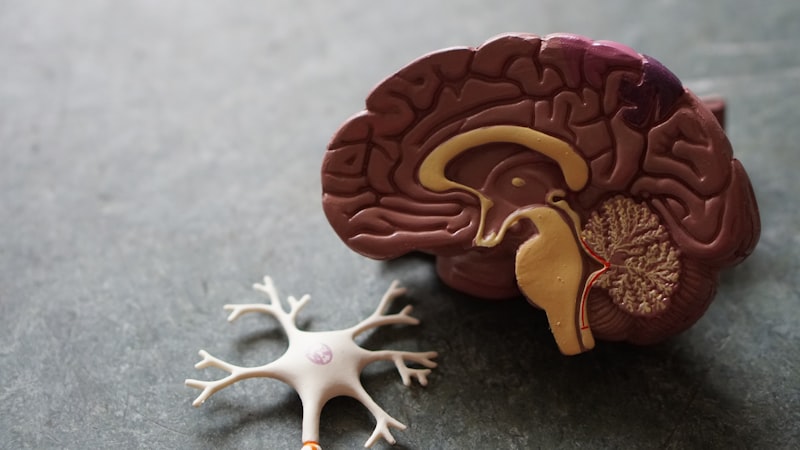
You have a second brain. It doesn't write poetry or solve differential equations, but it makes decisions that affect every aspect of your life — your mood, your sleep quality, your food cravings, even your gut feelings about people and situations.
This second brain is your enteric nervous system (ENS) — a complex network of 500 million neurons lining your gastrointestinal tract. To put that in perspective: that's more neurons than the entire spinal cord, and more than the brain of a cat or dog. It's called the "second brain" not as a metaphor, but as a literal description of a self-contained nervous system that operates semi-independently from your cranial brain.
The enteric nervous system is so sophisticated that it can continue to function even when the vagus nerve — the main highway connecting gut and brain — is severed. In laboratory studies, excised sections of gut tissue continue to produce coordinated peristaltic waves, secrete digestive enzymes, and regulate blood flow without any input from the brain whatsoever. Your gut is, quite literally, thinking for itself.
The implications are staggering. The health of your gut microbiome directly shapes the function of your enteric nervous system, which in turn shapes your emotional state, your sleep architecture, your cognitive performance, and even the decisions you make — all below the threshold of conscious awareness.
The Gut-Brain Axis: A Bidirectional Superhighway
The gut-brain axis is not a one-way street. It's a bidirectional communication system involving multiple pathways:
- The Vagus Nerve: 80% of vagus nerve fibers are afferent — meaning they carry information from the gut to the brain, not the other way around. Your brain is constantly listening to what your gut is saying. When your gut microbiome produces inflammatory metabolites, the vagus nerve tells your brain, and your brain adjusts your mood, your cognitive function, and even your pain perception accordingly.
- Neurotransmitter Production: Approximately 90% of your body's serotonin (the "happiness molecule") is produced in your gut. Between 50-60% of dopamine (motivation, reward, focus) is gut-derived. The bacteria in your microbiome directly influence the production of GABA (calm), acetylcholine (learning), and norepinephrine (alertness). When your gut is healthy, these neurotransmitter factories run efficiently. When it's compromised, so is your neurochemistry.
- Immune Signaling: 70-80% of your immune cells reside in your gut. These cells produce cytokines — signaling molecules that cross the blood-brain barrier and directly influence brain function. Chronic gut inflammation triggers systemic inflammatory cytokines that are strongly linked to depression, anxiety, and cognitive decline.
- Metabolite Signaling: Gut bacteria produce short-chain fatty acids (SCFAs) like butyrate, propionate, and acetate through fermentation of dietary fiber. These SCFAs enter circulation and influence everything from blood-brain barrier integrity to microglial function (the brain's immune cells) to neuroplasticity.
— Dr. Michael Gershon, Professor of Pathology and Cell Biology, Columbia University, author of The Second Brain
How Your Gut Microbiome Shapes Your Mood
The connection between gut health and mental health is one of the most exciting areas of modern neuroscience. The evidence is now overwhelming that the composition of your gut microbiome directly predicts your risk of depression, anxiety, and other mood disorders.
A landmark 2023 meta-analysis published in JAMA Psychiatry examined 59 studies involving over 7,500 participants and found a consistent pattern: individuals with diagnosed depression had significantly lower gut microbiome diversity compared to healthy controls, with specific depletion of Faecalibacterium and Coprococcus species — bacteria that produce the anti-inflammatory butyrate associated with brain health.
Even more compelling are the interventional studies. In a 2024 randomized controlled trial, participants with moderate depression who received a specific probiotic formulation containing Lactobacillus helveticus and Bifidobacterium longum showed a 41% reduction in depressive symptoms after 12 weeks — comparable to standard antidepressant medication, but without the side effects.
The mechanism is now well understood. Certain bacterial strains stimulate enterochromaffin cells in the gut lining to produce serotonin. Others activate the vagus nerve directly, sending signals that reduce the brain's stress response. Still others produce GABA, the brain's primary inhibitory neurotransmitter, which dampens anxiety and promotes calm.
Gut Health and Sleep: The Circadian Connection
Your gut microbiome doesn't just follow your circadian rhythm — it helps drive it. The bacteria in your gut have their own daily rhythms, and when those rhythms are disrupted, so is your sleep.
The gut microbiome exhibits diurnal oscillations in composition and function. Certain bacterial strains proliferate during the day (when you eat), while others dominate at night (when you fast). These microbial rhythms influence the availability of tryptophan — the amino acid precursor to both serotonin and melatonin, the sleep hormone.
When your gut microbiome is healthy and diverse, this daily rhythm is robust. But when it's disrupted by poor diet, antibiotics, or irregular eating patterns, the consequences cascade:
- Reduced melatonin production: Without the right gut bacteria to process tryptophan into serotonin, and then into melatonin, your body struggles to initiate and maintain deep sleep.
- Increased nighttime inflammation: A disrupted microbiome allows harmful bacteria to proliferate at night, triggering immune activation that fragments sleep and reduces slow-wave sleep duration.
- Altered growth hormone secretion: Growth hormone, critical for physical recovery and deep sleep, is partially regulated by gut-derived signals. Poor gut health correlates with reduced nocturnal growth hormone peaks.
A 2024 study in Sleep Medicine Reviews found that people who consumed a high-fiber diet (the primary fuel for beneficial gut bacteria) had 32% more slow-wave sleep and 40% fewer nighttime awakenings compared to those on a low-fiber diet — even when total sleep duration was the same between groups.
Your Gut's Influence on Decision Making
This is where the gut-brain axis gets truly fascinating — and perhaps a little unsettling. Your gut health may be influencing the decisions you make, from the food you choose to eat to the risks you're willing to take.
Research from the University of Oxford's Department of Experimental Psychology found that the composition of gut bacteria could predict decision-making styles with startling accuracy. Participants with higher levels of Prevotella (associated with plant-rich diets) showed greater cognitive flexibility and more analytical decision-making. Those with higher Bacteroides (associated with high-fat, low-fiber diets) showed more impulsive and reward-driven choices.
The mechanism appears to involve the dopamine system. Your gut bacteria influence the production of dopamine precursors, which in turn affect your brain's reward sensitivity. When your gut microbiome is optimized, your dopamine system is balanced — you experience appropriate motivation and reward from healthy behaviors. When it's dysregulated, your brain may overvalue immediate rewards (like sugar, junk food, or impulsive purchases) and undervalue long-term benefits.
This is not speculation. It's the foundation of a new field called nutritional psychiatry, which views the gut microbiome as a modifiable target for improving cognitive function, emotional regulation, and even behavioral outcomes.
Practical Strategies for Gut-Brain Axis Optimization
1. Prebiotic Diversity
The single most effective step you can take for your gut-brain axis is to eat a diverse range of plant fibers. Aim for 30+ different plant foods per week — fruits, vegetables, legumes, whole grains, nuts, seeds, herbs, and spices. Each plant type feeds different bacterial species, promoting the diversity that's strongly correlated with better mood and cognition.
2. Fermented Foods
Low-dose, consistent intake of fermented foods (sauerkraut, kimchi, yogurt, kefir, miso, kombucha) delivers live microbes directly to your gut. A 2024 study found that consuming fermented foods daily for 12 weeks shifted the microbiome in ways that correlated with reduced inflammatory cytokine production and improved mood scores.
3. Time-Restricted Eating
Aligning your eating window with daylight hours (e.g., eating between 8 AM and 6 PM) reinforces the microbiome's natural circadian rhythm. This improves the daily oscillations in tryptophan metabolism, enhancing both daytime alertness and nighttime sleep quality.
4. Stress Downregulation
It's bidirectional — just as gut health affects mood, mood affects gut health. Chronic stress directly reduces gut microbiome diversity, impairs intestinal barrier function, and increases inflammation. Practices like meditation, deep breathing, and moderate exercise support both brain and gut simultaneously.
5. Avoid Unnecessary Antibiotics
Antibiotics decimate gut bacterial diversity, and recovery can take months — or never fully restore the original composition. Only use antibiotics when medically necessary, and follow each course with a concerted effort to rebuild diversity through prebiotic-rich foods.
💡 The gut-brain axis is your most powerful leverage point for total well-being. Unlike many aspects of your health, you can actively improve your gut microbiome through daily choices. And when you support your second brain, your first brain thanks you with better mood, sharper cognition, deeper sleep, and clearer decisions.
The Bottom Line
Your gut is not a passive digestive tube. It's a sophisticated, semi-autonomous nervous system that maintains continuous dialogue with your brain — and that dialogue shapes who you are, how you feel, and how you perform. The 500 million neurons in your enteric nervous system are not just processing food; they're processing information, and that information directly influences your emotional state, your cognitive capacity, and your decision-making.
When you optimize your gut health, you're not just improving digestion — you're upgrading the operating system that governs your mood, your sleep, and your mind. The second brain deserves your attention. It's been looking after you all along.
Cross-reference: Your gut-brain axis directly influences your fitness performance and recovery. AI-powered training systems can now integrate gut health data to optimize workout timing, recovery windows, and stress management. Explore how at AI Body's fitness research hub.
🔬 Ready to reclaim your gut-brain connection? Learn how targeted nutrition and lifestyle changes can transform your microbiome and elevate your mental clarity. Start with diversity — and watch your second brain thrive.
Explore more: The Science of Fermented Foods →